This video is available directly on YouTube.
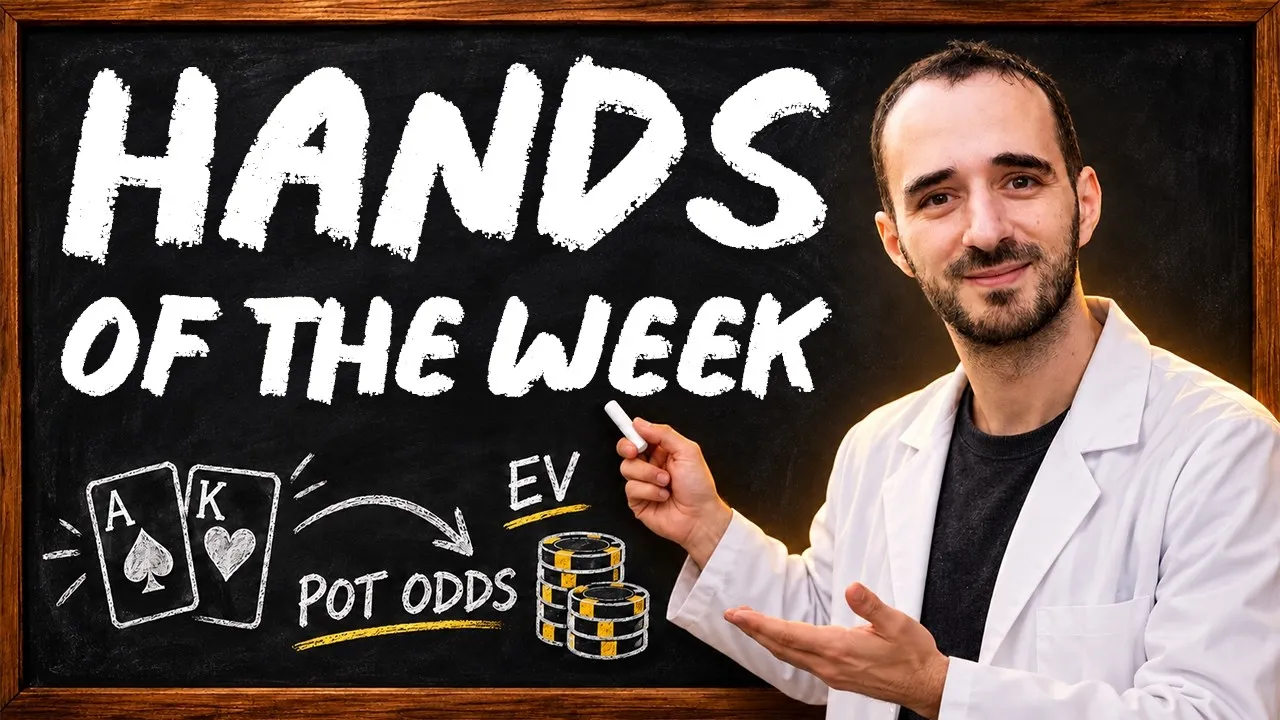
Watch on YouTubeUri Peleg reviews three real cash-game hands submitted by members of the Upswing Lab Discord, breaking down each decision street by street and focusing on the mistakes that actually cost players money. In the first hand, he shows why Ace-King becomes a bluff catcher once a dangerous board gets multiple players involved and the check-raise comes in.
The second hand is a good example of how a bad preflop decision can put you in trouble right away. Uri goes after the queen-deuce suited limp from UTG, then the 3-bet, and explains why neither play makes much sense. He also looks at the turn sizing and points out that the postflop play was actually fine once the hand got there.
The last hand is a very different spot. Uri looks at King-10 in a deep 2-5 game on a board where a lot of the usual hand-strength labels stop being very useful. Instead of asking whether King-Ten is good enough to bet, he asks a broader question: how weak can your hand be here and still bet? He then runs the spot through a solver to see where that threshold actually sits.
What this video covers:
- Why top pair/top kicker can become a fold when the action gets heavy.
- How multiway action changes the strength of your one-pair hands.
- Why weak preflop hands should not be turned into 3-bet bluffs.
- How preflop mistakes create avoidable postflop problems.
- Why connected boards can drastically reduce the value of strong-looking hands.
- How to think about the weakest hand you can value bet.
- How to use solvers to find better thresholds rather than blindly copy outputs.
- Why asking “How does this spot play?” is often better than asking “How do I play this hand?”.
The strongest lesson is that better poker decisions often come from framing the spot correctly, not from finding a fancy move.