This video is available directly on YouTube.
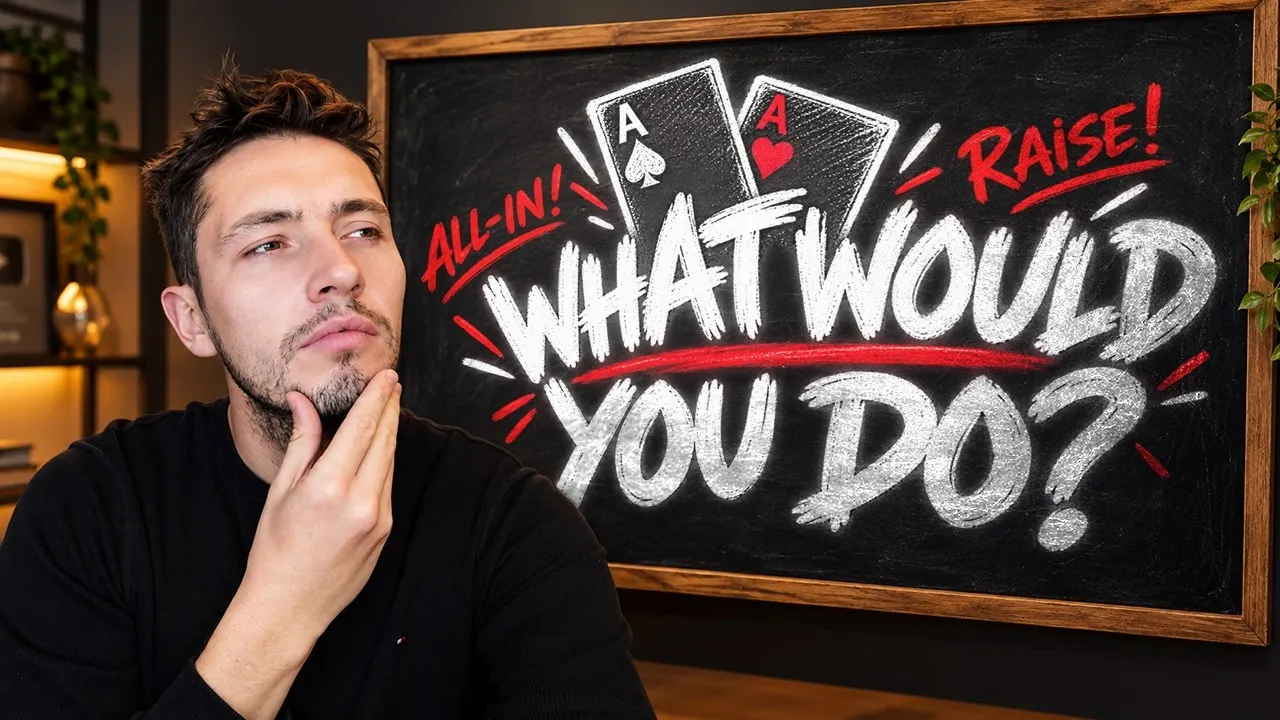
Watch on YouTubeOne of the biggest mistakes players make is treating the turn as a completely new decision, trying to guess their opponent's range and figure out what to do with their particular hand. But after the button checks back the flop in a single-raised pot, the big blind has a very specific opportunity to put pressure on that range. And surprisingly, the best strategy often involves polarizing and using large overbets rather than reaching for a small bet.
Skrim breaks down how to find the right value threshold and choose bluffs without having to run a solver every time. He looks at several types of hands that work well here, including gutshots with little showdown value, hands that block sets and top-pair calls, and flush draws when the turn gives them enough equity. The turn card matters too: some cards favour the big blind enough to allow smaller bets, while others call for much heavier polarization.
There's also a practical look at studying this spot in GTO Wizard. Skrim shows how to work through turn reports, train the check-check line, and build a strategy around three main bet sizes instead of trying to memorize dozens of different solutions. He finishes with population tendencies that create further opportunities to overbluff and punish opponents who fold too often.
What this video covers:
- Why the button's flop check-back changes the big blind's turn strategy.
- How a capped opponent's range creates opportunities for large overbets.
- How to find your value-betting threshold without running a solver.
- Which gutshots, blockers, and flush draws make the best turn bluffs.
- Why some turn cards favour smaller bets while others demand polarization.
- How to study this spot using GTO Wizard turn reports and its trainer.
- Why three well-chosen bet sizes can capture nearly all the EV of a more complex strategy.
- How to exploit population tendencies and opponents who overfold to delayed c-bets.
Watch the full breakdown to learn how to approach one of poker's most misunderstood turn spots and stop leaving profitable bets on the table.