
This video is available directly on YouTube.
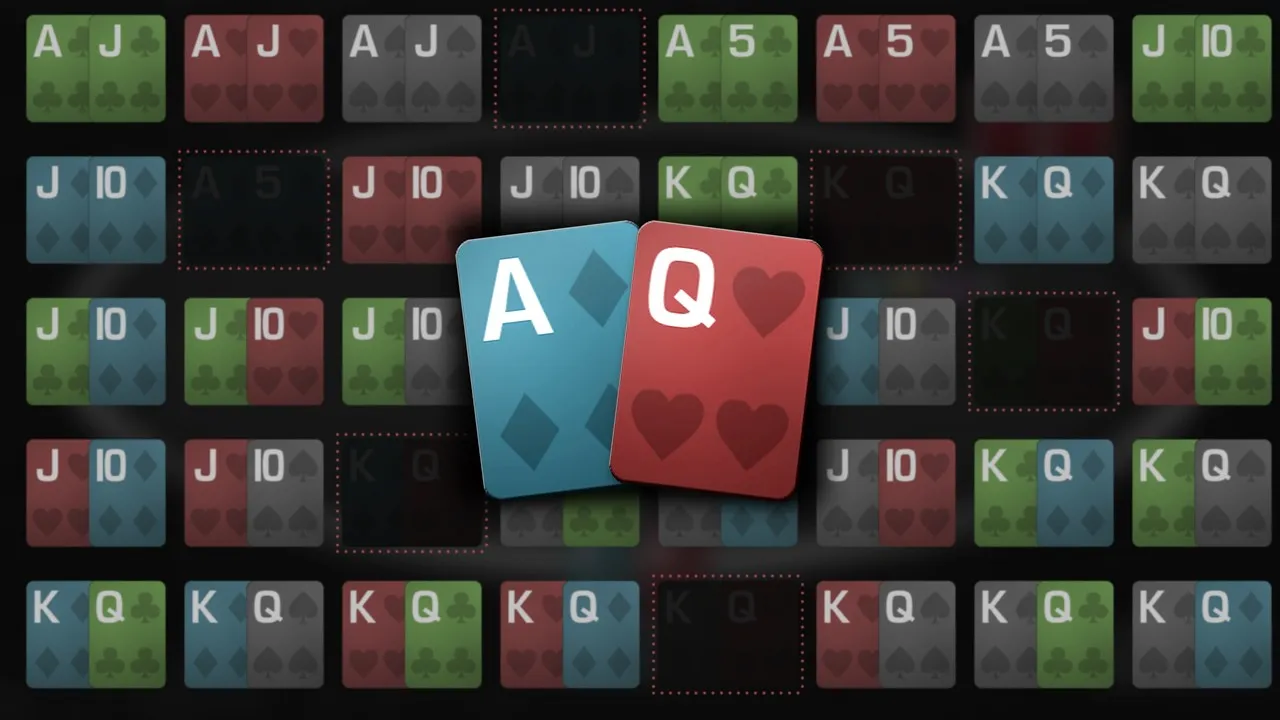
Watch on YouTubePicking your 3-bet bluffs doesn't have to start with memorizing another chart. This video introduces a simple way to look at your opponent's range: find the point where their weakest offsuit hands stop making the raise, then look for your own suited hands that sit just below that line.
The idea is that those suited hands are often dominated by the offsuit hands your opponent is willing to raise and then forced to fold when you put in a 3-bet. King-nine suited against king-ten offsuit is a good example. You would normally hate being dominated by king-ten, but if your 3-bet makes it fold before the flop, the hand that had you crushed never gets to realize its equity.
The video works through the concept from the hijack, cutoff, button, and small blind, showing how the line moves as ranges get wider or the situation changes. There is also an important warning at the end: this is a useful framework, not an automatic rule. If you know an opponent is unusually tight or refuses to fold hands like king-queen offsuit to a 3-bet, the correct adjustment may be to remove many of these bluffs from your range.
What this video covers:
- How to find the weakest offsuit hands in an opponent's raising range.
- Why these hands create a useful “fault line” for building 3-bet bluffs.
- How suited hands just below that line can force dominated hands to fold.
- Why offsuit combinations are especially useful targets because there are so many of them.
- How the strategy changes when moving from hijack versus cutoff to button versus cutoff.
- Why suited king-x hands often become effective 3-bet candidates.
- How the same idea can apply to aggressive reshoves with around 35 big blinds.
- Why this concept works in both tournament and cash-game situations.
- When position and players behind you make the strategy less attractive.
- Why real opponent tendencies should override a theoretical range when you have reliable information.
Watch the full breakdown to see how the offsuit fault line can help you build more effective 3-bet bluffs — and why the best players know when to use the rule and when to ignore it.