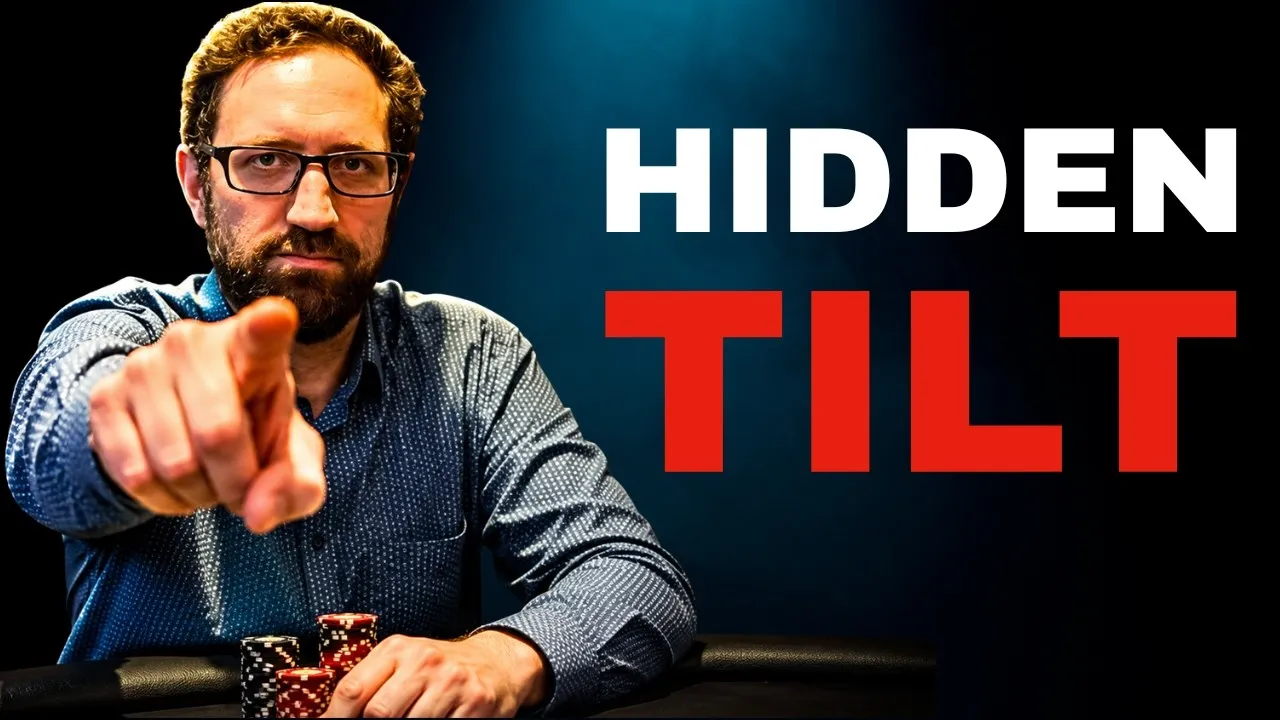
This video is available directly on YouTube.
Watch on YouTubeYou can play solid poker for hours, make good decisions, and then lose all of that profit in twenty minutes after one bad beat. The problem isn't always the hand itself. Sometimes it's what that hand makes you do next.
This video breaks down five different types of tilt that can change your decisions without changing the situation in front of you. Some are obvious, like revenge tilt after an opponent gets under your skin. Others are much harder to notice, including boredom tilt, entitlement tilt, running bad tilt, and even winner's tilt when a strong session makes you too confident about taking risks.
Each type comes with a different story in your head. You might feel that you've waited long enough for aces, start opening hands just because you're bored, stop trusting big pairs after a few bad beats, or convince yourself that you're running too well to lose. The result is the same: decisions that you would never make at the start of a session.
What this video covers:
- How entitlement tilt makes you feel that poker owes you a win after playing well or waiting for a strong hand.
- Why boredom can quietly lower your standards and lead to opening or calling with hands you'd normally fold.
- How revenge tilt turns one opponent into the focus of your session and makes winning back your money feel more important than making the best decision.
- Why running bad tilt makes players lose confidence in profitable plays after a few unlucky outcomes.
- How winner's tilt can appear when a big winning session changes your perception of risk.
- Why all five forms of tilt have the same underlying problem: letting earlier events affect the decision you're making right now.
- The simple "first hand of the session" test for spotting when emotions are changing your strategy.
- Why controlling tilt is only part of becoming a consistently profitable player.
Watch the full video to see how these five types of tilt show up at the table — and how catching them early can stop a good session from turning into a costly one.